
Kay Szymanski | Oct. 9, 2024Say someone dies and leaves behind land without a will or other legal document. Sometimes, things can get, well, a little "cloudy." That's what a clouded property title.

Dated: August 6 2025
Views: 320
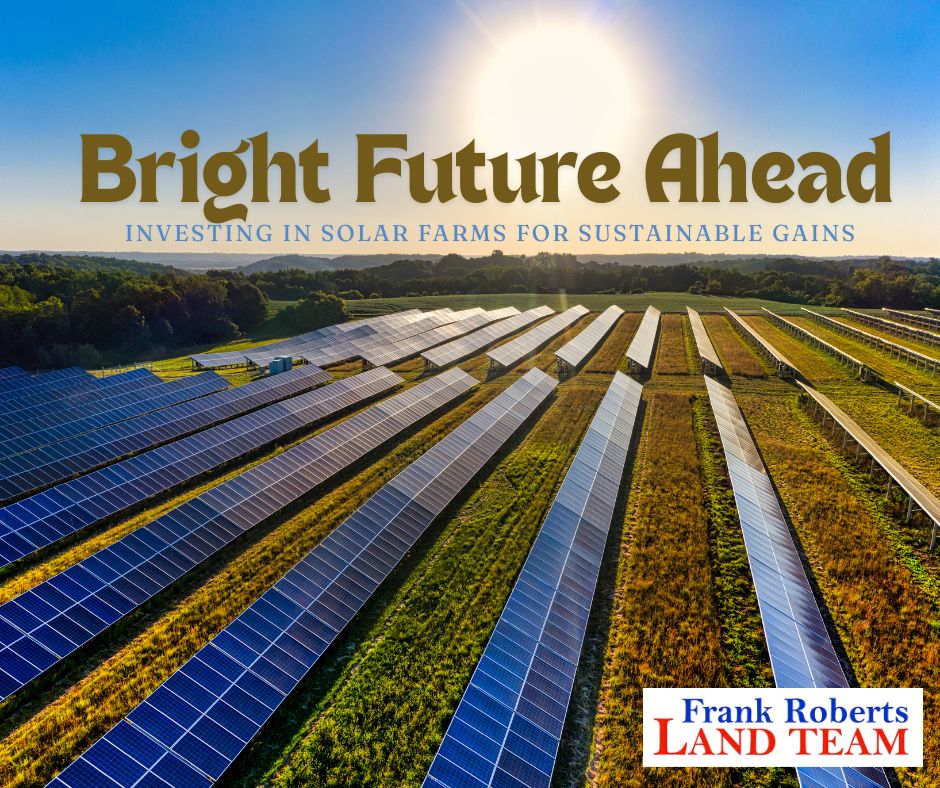
As the world shifts towards renewable energy, solar farms have emerged as a promising investment opportunity. For land investors, turning vast tracts of land into solar energy hubs can offer substantial financial returns while contributing to a sustainable future. This blog post will delve into the benefits, considerations, and steps involved in investing in solar farms.
Stable Income Stream: Solar farms generate consistent revenue through the sale of electricity. Power purchase agreements (PPAs) with utility companies can lock in long-term income.
High Demand: As governments and corporations push for renewable energy, the demand for solar power continues to rise. This creates a robust market for solar energy production.
Environmental Impact: Investing in solar farms helps reduce carbon footprints and promotes a greener planet. It aligns with the growing trend of environmentally conscious investments.
Tax Incentives: Many governments offer tax credits and incentives for renewable energy projects, significantly reducing the initial investment costs. Programs like the Investment Tax Credit (ITC) in the U.S. can cover up to 26% of the project's cost.
Location: Ideal locations for solar farms have ample sunlight, minimal shading, and proximity to power grids. Southern regions or areas with high solar irradiance are preferred. Use solar resource maps to identify optimal locations.
Land Suitability: Flat or gently sloping land with minimal vegetation is optimal. Conduct a thorough site assessment to ensure the land is suitable for solar panel installation. Soil stability and the presence of wetlands or protected areas should also be evaluated.
Regulatory Approvals: Navigating local, state, and federal regulations is crucial. This includes zoning laws, environmental impact assessments, and permits. Engage with local authorities early to understand the regulatory landscape and expedite approvals.
Infrastructure Access: Proximity to transmission lines and substations is important for efficient energy distribution. The closer the solar farm is to existing infrastructure, the lower the connection costs. Assess the grid capacity and potential upgrade requirements.
Financial Planning: Initial investment costs can be high. Consider financing options, partnerships, and government grants to mitigate expenses. Financial models should account for capital expenditures, operational costs, and expected revenues.
Long-Term Lease Agreements: Secure long-term lease agreements with landowners if you do not own the land. These agreements should cover the lifespan of the solar farm, typically 25-30 years.
Site Selection and Acquisition: Choose a suitable location and acquire the land. Ensure the site meets all technical and regulatory requirements. Engage with local stakeholders and conduct community outreach to gain support.
Feasibility Study: Conduct a comprehensive study to assess solar potential, environmental impact, and economic viability. This includes soil testing, solar radiation analysis, and financial projections. Feasibility studies often involve Geographic Information System (GIS) mapping and detailed engineering assessments.
Design and Permitting: Develop a detailed project design and obtain necessary permits. Work with engineers, environmental consultants, and legal experts to streamline this process. Design considerations include panel layout, electrical systems, and land use optimization.
Financing: Secure funding through loans, investors, or government programs. Detailed financial modeling and a solid business plan are essential to attract investors. Explore options like Power Purchase Agreements (PPAs), green bonds, and equity partnerships.
Construction and Installation: Hire experienced contractors for the construction and installation of solar panels and related infrastructure. Ensure compliance with safety and quality standards. Construction phases include site preparation, panel installation, and electrical interconnection.
Operation and Maintenance: Once operational, regular maintenance is crucial for optimal performance. Implement a maintenance schedule and monitor the system for efficiency. Use remote monitoring systems and predictive maintenance to minimize downtime and extend the lifespan of the equipment.
Investing in solar farms offers a unique opportunity to generate stable income while supporting renewable energy initiatives. By carefully considering location, land suitability, regulatory requirements, and financial planning, land investors can successfully tap into this growing market. The shift towards solar energy is not only a smart financial move but also a step towards a sustainable future.
Are you considering investing in a solar farm? Share your thoughts and questions in the comments below. Let's explore the potential of renewable energy together!
#SolarFarms #RenewableEnergy #LandInvestment #GreenEnergy #SustainableInvesting

Frank Roberts is a uniquely trained Broker Associate who specializes in the listing and sales of land in East Texas near the Dallas-Ft. Worth area. Located only 30 miles east of Dallas, he consistentl....
Kay Szymanski | Oct. 9, 2024Say someone dies and leaves behind land without a will or other legal document. Sometimes, things can get, well, a little "cloudy." That's what a clouded property title.
ETJ Texas ExplainedIf you're buying land, developing property, or investing in commercial real estate in Texas, you've probably heard the term ETJ.For many landowners, ETJ status can
When purchasing land, most buyers focus on location, acreage, price, and views. While those are certainly important, one of the most critical factors is often overlooked until it's too late: Where
Is Summer the Best Time to Buy Land in Texas?When it comes to purchasing land, timing can play an important role in finding the right property. While many buyers focus their search during the,
 © 2026 North Texas Real Estate Information Systems, Inc. All rights reserved. Disclaimer: All information deemed reliable but not guaranteed and should be independently verified. All properties are subject to prior sale, change or withdrawal. Neither listing broker(s) nor Frank Roberts Land Team shall be responsible for any typographical errors, misinformation, misprints and shall be held totally harmless. The database information herein is provided from and copyrighted by the North Texas Real
Estate Information Systems, Inc. NTREIS data may not be reproduced or redistributed and is only for people viewing this site. All information provided is deemed reliable but is not guaranteed and should be independently verified. The advertisements herein are merely indications to bid and are not offers to sell which may be accepted. All properties are subject to prior sale or withdrawal. All rights are reserved by copyright.
Data last updated: September 17, 2026 4:20 PM UTC
Show More...
© 2026 North Texas Real Estate Information Systems, Inc. All rights reserved. Disclaimer: All information deemed reliable but not guaranteed and should be independently verified. All properties are subject to prior sale, change or withdrawal. Neither listing broker(s) nor Frank Roberts Land Team shall be responsible for any typographical errors, misinformation, misprints and shall be held totally harmless. The database information herein is provided from and copyrighted by the North Texas Real
Estate Information Systems, Inc. NTREIS data may not be reproduced or redistributed and is only for people viewing this site. All information provided is deemed reliable but is not guaranteed and should be independently verified. The advertisements herein are merely indications to bid and are not offers to sell which may be accepted. All properties are subject to prior sale or withdrawal. All rights are reserved by copyright.
Data last updated: September 17, 2026 4:20 PM UTC
Show More...
